Comprehensive geotechnical laboratory testing forms the cornerstone of any successful construction or infrastructure project in Brownsville, Texas. The category encompasses a suite of physical and mechanical tests performed on soil and aggregate samples to determine their engineering properties. From defining the plasticity of fine-grained soils through Atterberg limits to establishing the particle size distribution via grain size analysis, these procedures transform raw site materials into quantifiable design parameters. In a region where subsurface conditions can vary dramatically within a short distance, laboratory verification is not merely a recommendation—it is an essential risk management tool that directly informs foundation design, earthwork specifications, and long-term structural integrity.
The local geology of Brownsville presents a unique set of challenges that demand rigorous laboratory scrutiny. The city sits within the Rio Grande Valley, characterized by deep alluvial deposits of Quaternary age. These sediments consist primarily of clays, silts, and fine sands deposited by the meandering Rio Grande over millennia. The region is well-known for its highly plastic, expansive clays, particularly those belonging to the Beaumont Formation, which can undergo significant volume changes with moisture fluctuation. This expansive behavior is a leading cause of foundation distress in the area. Furthermore, the proximity to the Gulf Coast means that loose, saturated sandy deposits susceptible to liquefaction during seismic events are a distinct possibility, making precise grain size distribution and density analysis critical for any structural design.
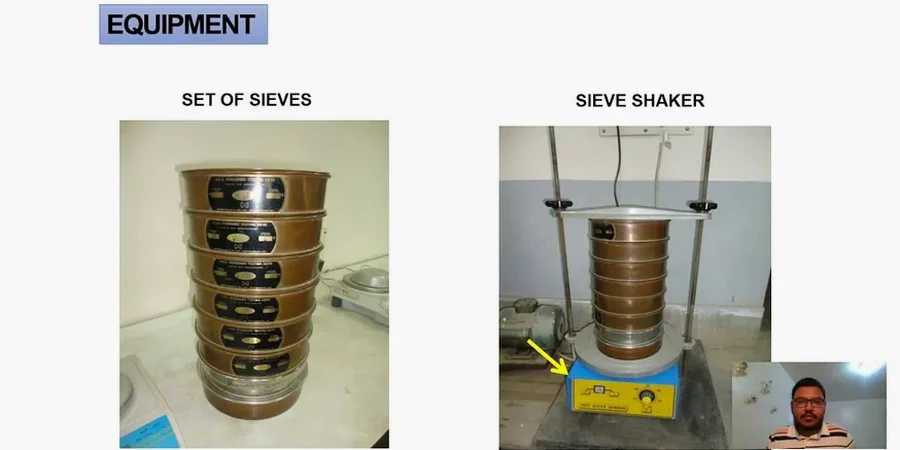
Laboratory testing protocols in Brownsville are governed by standards set forth by the American Society for Testing and Materials (ASTM) and the Texas Department of Transportation (TxDOT). For instance, Atterberg limits testing is performed in accordance with ASTM D4318, which standardizes the determination of liquid limit, plastic limit, and plasticity index. These values are crucial for classifying soils under the Unified Soil Classification System (USCS) and assessing their swell potential. Similarly, a complete grain size analysis combines sieve analysis (ASTM D6913) for coarse-grained particles and hydrometer analysis (ASTM D7928) for fine-grained silts and clays to create a full gradation curve. Adherence to these national and state-specific standards ensures that the resulting data is legally defensible, reproducible, and suitable for use by local permitting authorities and structural engineers designing to the International Building Code (IBC).
The necessity for these laboratory services spans a wide spectrum of projects in the Brownsville metropolitan area. For large-scale commercial developments and the burgeoning industrial sector, including facilities related to the Port of Brownsville, deep foundations and heavily loaded slabs require precise settlement and bearing capacity predictions derived from consolidation and shear strength testing. Transportation infrastructure projects under TxDOT jurisdiction, such as the expansion of I-69E or local arterial roads, mandate thorough soil classification and Proctor compaction testing to ensure durable, stable subgrades. Even for residential construction, which dominates much of the city's growth, identifying expansive clay layers through Atterberg limits testing is the single most effective way to prevent costly foundation repairs through proper pre-construction soil treatment or foundation design.
Questions and answers
Why is laboratory soil testing essential for construction projects in Brownsville, Texas?
Laboratory testing is critical in Brownsville due to the prevalence of expansive clays from the Beaumont Formation and loose alluvial sands along the Rio Grande. These soil conditions can cause significant foundation movement or settlement. Controlled lab tests provide the precise engineering properties—like plasticity and gradation—needed to design foundations that mitigate these local geotechnical hazards and comply with IBC and TxDOT standards.
What is the difference between field classification and certified laboratory testing?
Field classification by a geologist provides a preliminary visual-manual description of soils, which is subjective. Certified laboratory testing, following ASTM standards, provides objective, quantitative data on properties like liquid limit, plasticity index, and exact grain size percentages. This empirical data is legally defensible and mandatory for structural engineers to perform final bearing capacity, settlement, and swell potential calculations.
How do I know which laboratory tests are required for my specific project in Brownsville?
The required suite of tests is dictated by the project type, structural loads, and the soil conditions encountered during the geotechnical investigation. A commercial high-rise will require advanced shear and consolidation testing, while a residential slab primarily needs Atterberg limits and basic compaction tests. The geotechnical engineer of record analyzes the subsurface profile and specifies the testing scope necessary to satisfy local building code requirements.
What quality control measures should a geotechnical lab in Texas follow?
A credible geotechnical laboratory must adhere to strict quality control protocols, including calibration of equipment to ASTM and TxDOT specifications, participation in proficiency sample programs like the AASHTO re:source, and maintaining proper sample chain-of-custody. Technicians should hold relevant certifications, and the lab must routinely run duplicate and blank tests to ensure the precision and accuracy of results used for critical design decisions.