Ground improvement in Brownsville, Texas, encompasses a suite of geotechnical techniques aimed at enhancing the engineering properties of soil to support structural loads safely and economically. This category is critical in a region where natural soils often lack the bearing capacity or stability required for modern infrastructure, from commercial buildings to transportation networks. By modifying the ground in situ, these methods reduce settlement, mitigate liquefaction risk, and prevent slope failures, offering alternatives to deep foundations that can be cost-prohibitive or technically challenging given local conditions. For projects ranging from port expansions to wind farm installations, understanding and applying appropriate ground improvement strategies ensures long-term performance and resilience against both static and seismic demands.
The local geology of Brownsville presents unique challenges that make ground improvement not just beneficial but often necessary. The city sits within the Rio Grande Valley, underlain by Quaternary alluvial deposits consisting of interbedded clays, silts, and fine sands. These sediments, deposited by the meandering Rio Grande and its ancestral channels, are typically loose to medium-dense in their upper layers and can extend to significant depths. High groundwater tables, often within a few feet of the surface, exacerbate issues of soil saturation and reduce effective stress. Additionally, the proximity to the Gulf of Mexico introduces saline intrusion and the presence of soft, compressible organic clays in low-lying areas, creating a heterogeneous subsurface profile that demands careful characterization before any design work begins.
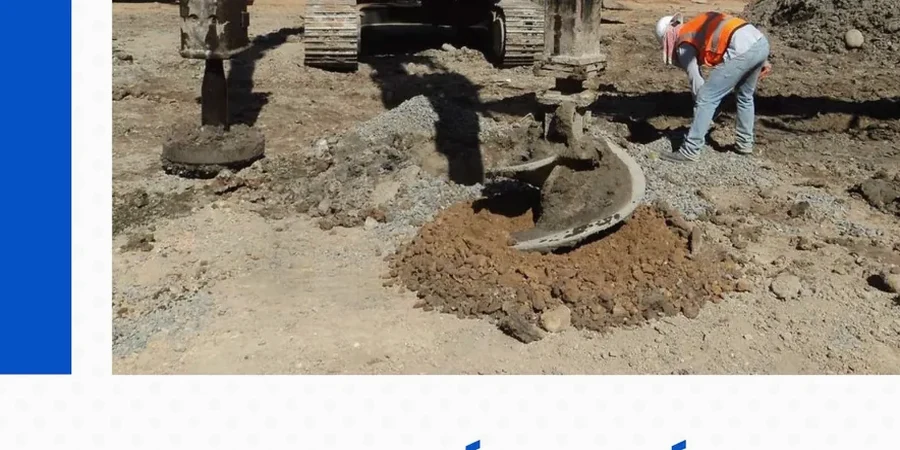
In the United States, ground improvement design must adhere to standards established by organizations such as the American Society of Civil Engineers (ASCE) and the Federal Highway Administration (FHWA). Locally, projects in Brownsville are subject to the City of Brownsville Building Code, which adopts the International Building Code (IBC) with Texas-specific amendments. The IBC references ASCE 7 for load combinations and seismic design parameters, as well as industry guidelines like those from the Deep Foundations Institute (DFI) for techniques such as stone column design. For transportation works, the Texas Department of Transportation (TxDOT) provides rigorous specifications, particularly for bridge approaches and embankments on soft ground, where methods like vibrocompaction design must meet strict acceptance criteria for density and bearing capacity.
The types of projects requiring ground improvement in Brownsville are diverse, reflecting the region's economic drivers and environmental conditions. The Port of Brownsville, a major deepwater seaport, frequently demands ground treatment for container yards, crane foundations, and bulkhead structures where loose sands are prone to liquefaction during seismic events. The growing renewable energy sector, including wind turbine farms in the surrounding coastal plains, relies on improved ground to resist cyclic loading and overturning moments. Commercial and industrial developments on the city's expanding outskirts often encounter soft clays that necessitate preloading with wick drains or the installation of rigid inclusions. Even residential subdivisions benefit from techniques that stabilize expansive soils, preventing slab distress and utility damage over time.
Available services
Questions and answers
What is ground improvement and when is it needed instead of deep foundations?
Ground improvement modifies the physical properties of in-situ soils to increase bearing capacity, reduce settlement, or mitigate liquefaction, often avoiding the need for costly deep foundations like piles. It is preferred when weak soils are relatively shallow, the site is large, or the required treatment depth is economically achievable, making it a common choice for warehouses, embankments, and port facilities in Brownsville's soft alluvial terrain.
How do local soil conditions in Brownsville influence the choice of ground improvement methods?
Brownsville's soils are dominated by loose to medium-dense alluvial sands and soft clays with a shallow water table, making them susceptible to liquefaction and excessive settlement. This favors vibratory methods like vibrocompaction for sandy profiles and drainage-assisted techniques for cohesive soils, while the high groundwater requires careful control of pore pressure during treatment to ensure effectiveness.
What are the key design standards governing ground improvement in Texas?
Ground improvement designs in Texas follow the International Building Code, as adopted locally, along with ASCE 7 for seismic and load criteria. TxDOT specifications apply to transportation projects, and industry guidelines from the Deep Foundations Institute provide method-specific recommendations. A geotechnical engineer must also comply with City of Brownsville permit requirements and any applicable environmental regulations.
Which types of projects in the Brownsville area typically require ground improvement?
Projects frequently requiring ground improvement include port infrastructure like container yards and wharves, wind turbine foundations in coastal plains, commercial buildings on soft clays, and roadway embankments over compressible soils. Any structure imposing significant loads on the loose, saturated alluvium common to the Rio Grande Valley may benefit from these techniques to ensure stability and performance.