In the Brownsville area, the subsurface rarely tells a straightforward story until you're twenty feet down. The Rio Grande floodplain deposits alternating layers of silty sand, soft clay lenses, and loose granular fill that can settle unpredictably under structural loads. We approach vibrocompaction design as a precision densification tool, not a one-size-fits-all solution. The city's proximity to the Gulf Coast means groundwater sits high, typically three to seven feet below grade, which directly influences the effective radius of influence around each vibrator penetration point. We specify grid spacing, dwell time, and amperage draw based on pre-condition site characterization, because guessing with loose sands in Cameron County leads to differential settlement that manifests within the first two wet seasons.
Loose alluvial sands under high groundwater demand a compaction grid calibrated to N-value improvement, not just energy input.
Technical details of the service in Brownsville Texas
Risks and considerations in Brownsville Texas
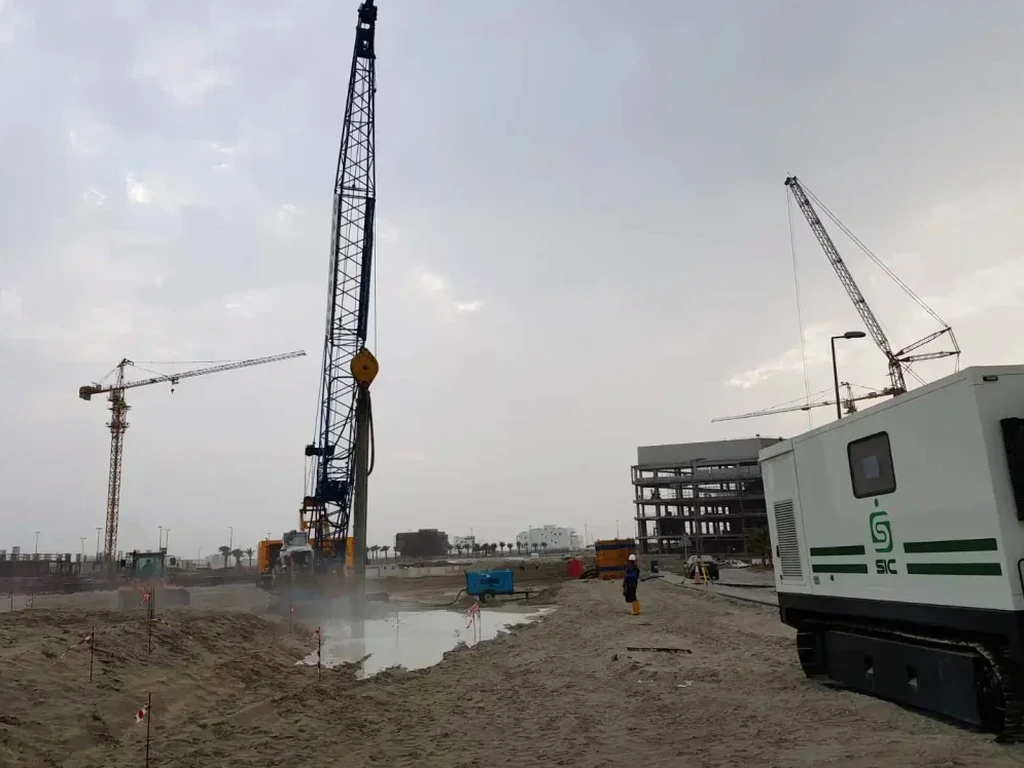
A warehouse project near the Port of Brownsville connector road encountered a buried paleochannel filled with organic silt and loose sand at fourteen feet. The initial vibrocompaction design assumed a continuous granular profile, but the soft lens collapsed during the first pass, causing a surface depression and skewing the vibrator mast. We halted, ran three supplemental CPT soundings on a ten-foot grid across the affected area, and identified a sixty-foot-wide zone where the fines content exceeded eighteen percent. Vibrocompaction alone cannot densify cohesive or organic-rich soils; attempting it wastes energy and creates a false sense of improvement. The corrected design combined vibrocompaction on the flanks with a stone column reinforcement through the paleochannel, transferring load to the competent sands below. Post-treatment SPT blow counts jumped from N=7 to N=22 across the densified zone, and the floor slab has shown less than a quarter inch of total settlement after two years of operation.
Our services
Our vibrocompaction design package for Brownsville sites integrates subsurface characterization, grid specification, and post-treatment verification into a single work scope. The deliverables align with IBC special inspection requirements and typical lender technical due diligence for commercial construction in Texas.
Pre-treatment Site Characterization and Design
We execute CPT soundings or SPT borings on a grid sufficient to map stratigraphic variability across the pad footprint. The design report specifies vibrator power class, triangular grid geometry with primary and secondary pass sequencing, target depth and refusal criteria, groundwater control measures, and settlement performance estimates under design bearing pressures.
Post-treatment Verification Testing
We perform statistical comparison of pre- and post-compaction CPT tip resistance and SPT N-values at matched locations. The verification report includes relative density calculations, settlement reanalysis, and documentation for the engineer of record to close out special inspection requirements under IBC Section 1705.6.
Questions and answers
What soil types in Brownsville respond well to vibrocompaction?
Clean sands (SP) and silty sands (SM) with fines content below 15 percent are ideal. The Rio Grande alluvium in the Brownsville area often contains interbedded clay lenses; we identify these during pre-treatment CPT profiling because vibrocompaction cannot densify cohesive layers. When fines exceed 15 percent, vibrator penetration slows and pore pressure dissipation delays, so we typically supplement with stone columns or rigid inclusions through those zones.
How do you verify that the vibrocompaction achieved the specified density?
We run CPT soundings or SPT borings at pre-defined locations, typically one test per 2,500 to 5,000 square feet of treated area, matching the pre-treatment grid. The acceptance criterion is usually a minimum tip resistance or N-value corresponding to 70-85% relative density. Statistical comparison of pre- and post-treatment data confirms the improvement, and we document it for the geotechnical engineer of record.
What depth can vibrocompaction effectively treat in the Lower Rio Grande Valley?
With electric vibrators in the 130-180 kW range, we routinely achieve effective densification to 35-45 feet below grade in the loose alluvial sands common around Brownsville. Deeper treatment is possible with larger rigs, but the high groundwater table and occasional gravel stringers at depth can limit penetration. We always confirm achievable depth with a trial compaction point before mobilizing the full grid.
What does vibrocompaction design cost for a typical Brownsville commercial site?
Is vibrocompaction suitable near existing structures in downtown Brownsville?
Vibrocompaction generates ground vibrations that can affect adjacent structures, particularly older unreinforced masonry buildings common in Brownsville's historic downtown. We conduct vibration monitoring with seismographs at the nearest foundation line and specify a minimum setback, typically 15-25 feet depending on vibrator power. Inside that radius, we switch to low-vibration methods such as compaction grouting or rigid inclusions.