In-situ testing forms the backbone of reliable geotechnical engineering in Brownsville, Texas, encompassing a suite of field-based methods that evaluate soil and subsurface conditions without removing samples from their natural environment. This category covers essential techniques such as the Standard Penetration Test (SPT), Cone Penetration Testing (CPT), pressuremeter testing, vane shear testing, and the widely used field density test (sand cone method). For a city experiencing rapid industrial growth and infrastructure expansion along the Rio Grande Valley, the value of in-situ testing lies in its ability to provide immediate, site-specific data on bearing capacity, compaction levels, and stratigraphy, directly informing foundation design and earthwork quality control.
Brownsville's unique geological setting presents specific challenges that make in-situ testing indispensable. The city rests on the South Texas Coastal Plain, characterized by Quaternary alluvial and deltaic deposits from the Rio Grande. These soils consist largely of interbedded clays, silts, and fine sands with highly variable densities and moisture contents. The presence of expansive clay lenses, loose windblown sands, and a shallow groundwater table near the surface can lead to differential settlement, poor drainage, and unstable slopes. In-situ methods like the CPT are particularly adept at delineating these thin, problematic layers and detecting the depth to competent bearing strata, which is critical for avoiding structural distress in the region's notorious shrink-swell clays.
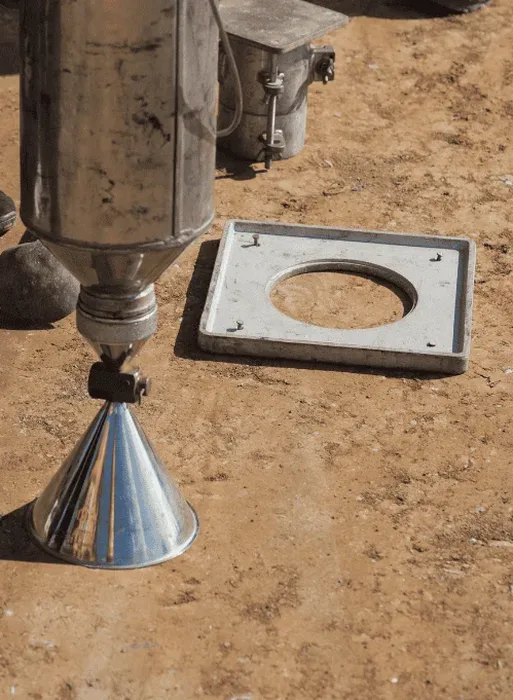
All in-situ testing performed in Brownsville must adhere to standards established by the American Society for Testing and Materials (ASTM) and, for transportation projects, the Texas Department of Transportation (TxDOT) specifications. Key ASTM standards include D1586 for the Standard Penetration Test, D5778 for the Cone Penetration Test, and D1556 for the field density test (sand cone method). TxDOT's Tex-115-E governs field density testing for roadway base courses. Compliance with these protocols ensures that data is legally defensible, reproducible, and accepted by local building officials and the City of Brownsville Engineering Department during plan review and permitting, particularly for projects within special flood hazard zones or critical infrastructure corridors.
A diverse range of projects in Brownsville demands comprehensive in-situ testing programs. Large-scale industrial developments, such as those at the Port of Brownsville and liquefied natural gas (LNG) facilities, rely on CPT and pressuremeter testing to design deep foundations for heavy storage tanks and processing units. Commercial and residential subdivisions require rigorous density verification using the field density test (sand cone method) to ensure compacted fill meets specifications, preventing future slab-on-grade failures. Public works projects, including bridge abutments over resacas and levee improvements along the Rio Grande, use vane shear tests to assess the undrained shear strength of soft clays. Even renewable energy installations, like wind farms, depend on in-situ measurements to optimize turbine foundation design.
Available services
Questions and answers
What is the primary advantage of in-situ testing over laboratory testing for Brownsville soils?
In-situ testing evaluates soils in their natural state, preserving in-place stress conditions, moisture content, and fabric that are often disturbed during sampling and transport. This is crucial in Brownsville, where interbedded sands and clays can change dramatically when extracted, providing more representative data on strength and compressibility for foundation design.
Which ASTM standards govern common in-situ tests used in Brownsville?
The primary standards include ASTM D1586 for the Standard Penetration Test (SPT), ASTM D5778 for Cone Penetration Testing (CPT), ASTM D1556 for the sand cone density method, and ASTM D2573 for field vane shear tests. TxDOT also specifies Tex-115-E for density testing on transportation projects, which is widely referenced in the area.
How do local soil conditions affect the selection of in-situ testing methods?
Brownsville's geology features soft clays, loose sands, and a high water table. CPT is excellent for profiling these soft soils and detecting thin sand seams. Vane shear testing directly measures clay strength for levee and resaca projects. Density tests like the sand cone method verify compaction in granular fill placed above the water table.
When is a field density test using the sand cone method required during construction?
This test is typically required during earthwork and site preparation to verify that compacted fill, base course, or backfill meets the specified density and moisture requirements. Building officials in Brownsville commonly mandate it for structural fill under foundations, utility trench backfill, and pavement subgrades to prevent future settlement.